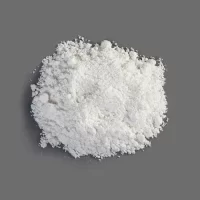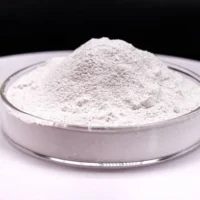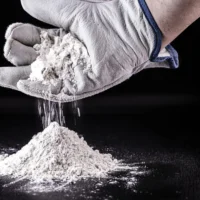
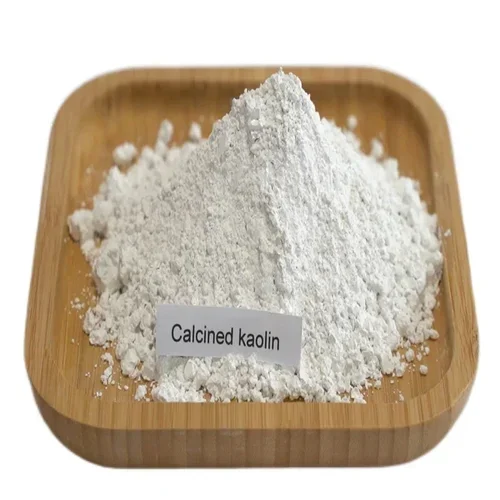
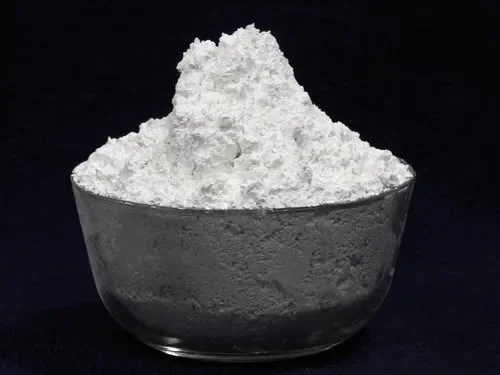
Calcined kaolin is a high-performance mineral used as an opacifier and functional extender across a wide range of industrial formulations. Manufacturers who need consistent visual quality and reliable performance prefer it because it has a unique mix of brightness, opacity, electrical insulation, and low moisture content.
Classic Solvents supplies carefully chosen grades of calcined kaolin to customers who want to control their formulations, need cost efficiency, and get their supplies from a reliable source. As a trusted partner to leading producers and calcined clay manufacturers in India, we help customers access materials that support both technical performance and long-term production stability.
From paints and coatings to plastics, rubber, and specialty systems, calcined kaolin continues to play a vital role in modern manufacturing.
Calcined kaolin is produced by heating hydrous kaolin clay to controlled high temperatures. This thermal treatment removes chemically bound water and changes the internal crystal structure of the mineral. The result is anhydrous aluminium silicate with enhanced physical and chemical characteristics.
This process increases whiteness, improves opacity, and strengthens the mineral structure. The calcination step also reduces moisture sensitivity, which helps improve storage stability and formulation consistency. The material is often referred to as calcined china clay, reflecting its processed form and improved functional behaviour compared to untreated kaolin.
These changes make calcined kaolin better suited for demanding industrial applications where appearance, stability, and process control are critical.
| Function Area | Role in Formulation | Benefit to End Product |
| Light Scattering (Opacifier) | Helps scatter incoming light within the film or matrix | Improves hiding power, whiteness, and visual coverage |
| Pigment Spacing Optimization | Supports uniform dispersion and spacing of pigments | Enhances opacity efficiency and color consistency |
| Functional Extension | Adds controlled volume without degrading performance | Reduces formulation cost while maintaining quality |
| Rheology and Body Control | Contributes to formulation structure and flow behavior | Improves application properties and film build |
| Pigment Cost Optimization | Reduces reliance on higher-cost prime pigments | Supports cost-effective formulation design |
| Film Coverage Support | Helps improve overall film uniformity | Delivers smoother appearance and better surface finish |
Calcined Kaolin is used very commonly because of how well it improves the visual appearance of end products. The calcination process increases the brightness and improves the light-reflection of the mineral itself; thus creating greater levels of whiteness and a more uniform surface appearance once finished.
Calcined Kaolin also helps to provide excellent hiding power in coatings and pigmented (where light is reflected completely or painted all over) systems by allowing for good light scattering; thus contributing to better transparency and gloss control and helping cemented materials to look uniform across very large surface areas.
The benefits of being able to improve and maintain the visual quality and consistency of the coating directly affects the perceived value of all types of architectural coatings, industrial finishes, and plastic items.
Calcined kaolin offers improved electrical insulation properties compared to hydrous kaolin. Dielectric performance is improved and moisture content is decreased by switching to anhydrous aluminium silicate. Because of this, the material can be used in applications where insulation and electrical resistance are crucial.
Calcined kaolin promotes stable electrical behaviour and enhanced thermal resistance in PVC compounds, wire and cable materials, and speciality polymer systems. Its thermal stability allows it to perform reliably in high-temperature processing environments such as extrusion and molding.
These properties make calcined kaolin a valuable functional filler in applications that demand both mechanical and electrical performance.
Calcined kaolin’s capacity to lower water requirements in a variety of formulations is another significant benefit. Improved solids loading while preserving workable viscosity is made possible by the altered surface properties and reduced moisture content.
This results in more stable rheology, enhanced application behaviour, and better flow control in coatings, adhesives, and slurry-based systems. In coating systems, reduced water demand also promotes better film formation and quicker drying.
Manufacturers can increase production efficiency while preserving consistent end product quality thanks to these processing advantages.
Calcined kaolin acts as a reinforcing filler in plastics and rubber compounds. Its rigid particle structure contributes to improved stiffness and dimensional stability in molded and extruded parts.
In rubber applications, it helps enhance hardness and abrasion resistance while supporting better processing characteristics. In plastic systems, it contributes to improved surface quality and structural integrity.
These reinforcement benefits make calcined kaolin useful not only as an extender but also as a functional material that supports mechanical performance.
Classic Solvents works closely with established calcined clay manufacturers in India who follow controlled processing methods and consistent quality systems. This ensures stable mineral characteristics and a dependable long-term supply.
Each batch is chosen based on set standards for brightness, the size of the particles, and the amount of moisture in the air. This helps customers maintain the performance of their formulations the same from one production cycle to the next.
Our team understands how calcined kaolin functions in different systems. We support customers in selecting the right grade to meet optical, mechanical, and processing requirements.
As one of the trusted calcined kaolin suppliers, Classic Solvents supports both large-scale manufacturers and specialized users with flexible packaging and dependable delivery schedules.
Classic Solvents supplies multiple grades of calcined kaolin to support a wide range of performance needs:
Each grade is selected to deliver predictable performance and reliable dispersion in the intended application.
Improves opacity, brightness, and film integrity while supporting pigment optimization and surface smoothness.
Supports rheology balance, print quality, and film strength while contributing to formulation stability.
Helps improve dispersion, color control, and mineral extension strategies.
Used in coating and finishing systems where surface appearance and whiteness are important.
Enhances stiffness, electrical insulation, and dimensional stability in rigid PVC formulations.
Contributes to opacity in paper systems and supports thermal stability and body in ceramic formulations.
These diverse applications highlight the versatility of calcined China clay across industrial value chains.
Classic Solvents places strong emphasis on quality and performance consistency. Material evaluation includes brightness, particle size control, moisture levels, and chemical stability. This ensures that every grade of calcined kaolin meets defined performance standards.
Working with qualified producers and calcined clay manufacturers in India allows us to support customers with materials that deliver repeatable results in real-world production conditions.
Processing conditions and application requirements determine which grade is best. Crucial elements consist of:
Classic Solvents supports customers by matching these parameters with the most suitable calcined kaolin grade.
For several decades, Classic Solvents has helped Indian manufacturers by providing them with reliable sourcing, technical knowledge, and consistent material quality. Our role goes beyond supply. We help customers secure raw materials that support stable production, predictable performance, and long-term growth.
As one of the dependable calcined kaolin suppliers, we are committed to delivering anhydrous aluminium silicate materials that perform in demanding industrial environments.
Whether your application requires improved opacity, electrical insulation, or formulation efficiency, Classic Solvents ensures the right calcined kaolin grade with professional support at every stage.