Smooth film formation is critical to the success of any high-performance coating. Coalescing agents make that possible by softening polymer particles during the drying process, helping them merge into a flawless, continuous film. Classic Solvents supplies high-grade coalescing agents, including the industry-trusted C-12 Ester Alcohol coalescing agent, designed to improve flexibility, durability, and surface quality across a wide range of formulations.
Coalescing agents are additives used primarily in water-based paints, coatings, and adhesives to promote the fusion of dispersed polymer particles. When the coating dries, these agents temporarily plasticize the polymer, lowering its minimum film-formation temperature (MFFT) so the particles can flow and unite smoothly. Without this step, coatings often appear chalky or brittle, with poor adhesion and weak protective properties.
Among the available types, C-12 Ester Alcohol remains one of the most widely used coalescing agents worldwide. Known for its balanced evaporation rate and broad compatibility with different polymer systems, it delivers consistent film quality and long-term coating performance.
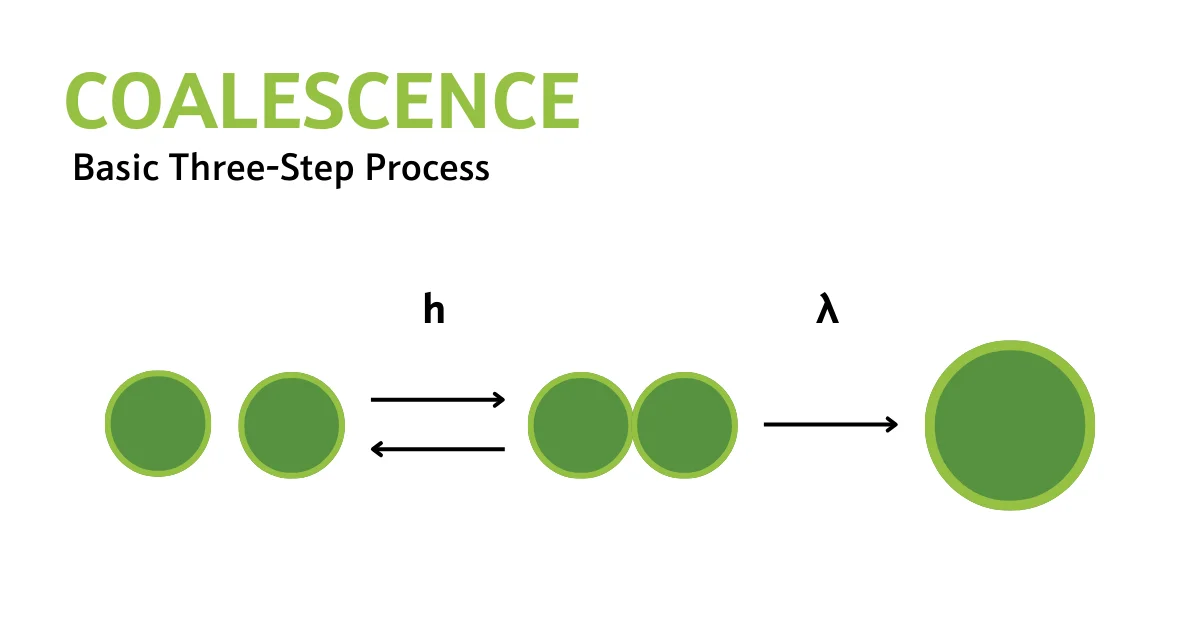
Understanding how these agents function helps formulators choose the right material for their systems. In a waterborne coating, polymer particles are dispersed in water along with pigments and other additives. As water begins to evaporate, the particles come closer together but need additional assistance to deform and merge.
This is where coalescing agents come into play. They migrate into the polymer particles and temporarily reduce their hardness or glass transition temperature. This softening effect allows the particles to flatten and interlock, creating a dense, uniform film once the water completely evaporates.
After the film has formed, the coalescing agent either slowly evaporates or remains in the matrix, depending on its volatility. Agents like C-12 Ester Alcohol coalescing agent provide an ideal balance – evaporating slowly enough to ensure complete film formation but leaving behind no tacky residue. The result is a coating that maintains integrity, smoothness, and mechanical strength.
Properly chosen coalescing agents can also help improve the coating’s open time, enhance flow and leveling, and prevent issues like mud cracking or orange peel texture. This makes them indispensable in both architectural and industrial coatings where appearance and performance must go hand in hand.
Using the right coalescing agents delivers a range of functional and aesthetic benefits:
Promotes uniform particle fusion, preventing pinholes or voids.
Ensures coatings remain resilient under temperature and humidity variations.
Improves appearance and surface uniformity across large areas.
Controls evaporation rate for improved workability and finish.
Effective in acrylic, styrene-acrylic, and vinyl-based emulsions.
Low-VOC formulations like C-12 Ester Alcohol align with modern environmental standards.
Classic Solvents has built a reputation for quality, dependability, and technical depth in chemical supply. Every coalescing agent we offer is sourced from verified partners and tested to deliver stable, reproducible results.
Reliable sourcing of coalescing agents ensures consistency for every batch.
Decades of experience in formulation chemistry allow us to guide clients in product selection and optimization.
Each shipment undergoes stringent testing for purity, volatility profile, and film-forming efficiency.
Tailored solutions for different coating systems and climatic conditions.
Options suitable for both high-volume industrial buyers and niche specialty producers.
Classic Solvents is not just a supplier – it’s a technical partner helping customers achieve superior coating performance and manufacturing reliability.
| Grade Type | Applications | Highlights |
|---|---|---|
| General Coalescing Agents | Latex paints, adhesives, paper coatings, Architectural, industrial, and specialty coatings | Reduces MFFT, enhances flexibility, improves flow and leveling |
| Specialty Coalescing Agents | High-performance and low-VOC formulations | Designed for demanding finishes with excellent durability |
Each product is tested for purity, compatibility, and performance. Classic Solvents works closely with formulators to ensure every batch aligns with the end-use requirements and environmental standards.
Coalescing agents serve as performance enhancers across multiple sectors:
Enable uniform films even at low drying temperatures, ensuring durable wall finishes.
Maintain mechanical strength and surface smoothness in harsh environments.
Improve adhesion and prevent uneven drying.
Enhance protective coating layers and surface uniformity.
Increase flexibility and reduce cracking post-curing.
Quality defines Classic Solvents. Each coalescing agent undergoes analytical testing to verify purity, volatility, and film-forming effectiveness. We collaborate with established manufacturers to ensure a consistent supply chain and maintain traceability for every product.
Our technical specialists also support customers with formulation guidance – helping adjust dosage, test film performance, and fine-tune parameters such as gloss, hardness, and block resistance. Whether you are producing decorative paints or industrial topcoats, our coalescing agents are engineered to deliver consistent performance and regulatory compliance.
Choosing the most effective coalescing agents depends on several factors:
Classic Solvents assists formulators in selecting the most suitable agent – whether it’s a general-purpose additive or a coalescing agent optimized for low-VOC, high-durability coatings.
Classic Solvents is your trusted source for premium coalescing agents that deliver proven performance, consistent quality, and technical reliability. Our portfolio includes the renowned coalescing agent and a variety of specialized solutions tailored to meet the evolving needs of the coating industry.
With decades of experience, dependable logistics, and hands-on formulation expertise, Classic Solvents ensures your coatings achieve exceptional film quality and durability every time. Connect with us through our inquiry form to discover how our coalescing agents can elevate your formulations and enhance product performance.
Coalescing agents help polymer particles in waterborne or solvent-based coatings merge into a uniform film, enhancing adhesion, flexibility, and surface smoothness for superior coating performance.
Yes, C-12 Ester Alcohol is a highly effective coalescing agent widely used for its balanced evaporation rate, low odor, and excellent compatibility with various polymer systems.
A coalescing agent lowers the minimum film formation temperature (MFFT), enabling polymer particles to fuse smoothly, resulting in defect-free, durable coatings.
Typically, coalescing agents are used at 1–5% of polymer solids. The exact dosage depends on polymer type, ambient conditions, and desired film properties.
Yes. Using coalescing agent or other coalescing agents allows coatings to form smooth, continuous films even under cooler temperatures or high-humidity conditions.