

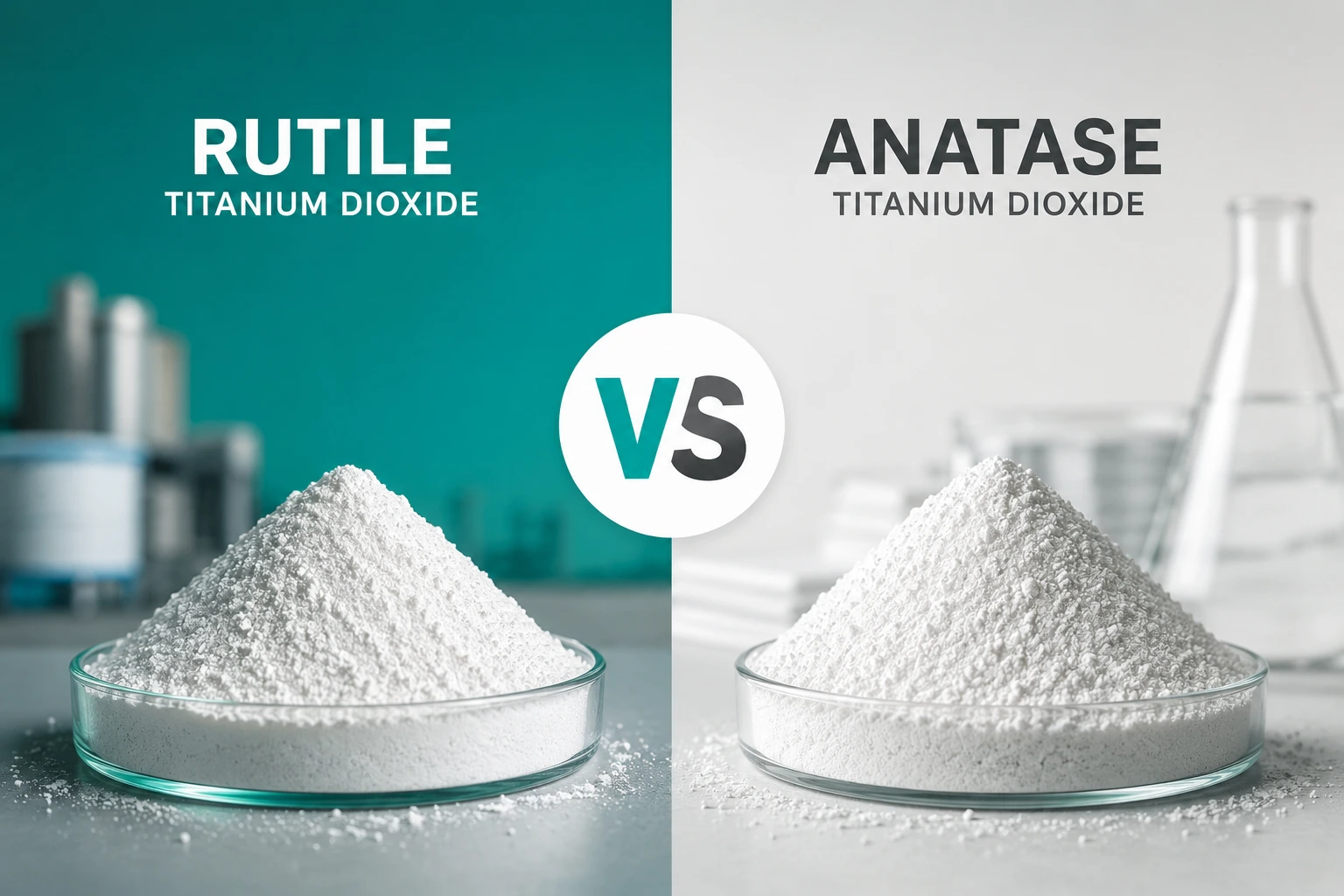
Rutile Titanium Dioxide Vs Anatase: Which One Is Best for Your Industry?
Titanium dioxide is one of the most widely used white pigments in industrial manufacturing. It is used to improve whiteness, opacity, and surface finish in a wide range of products. Most industries rely on it to achieve consistent visual quality and performance.
There are two main forms used in manufacturing: rutile and anatase. Both come from the same chemical base, but their structure and performance behave differently in real applications.
Rutile is known for strength and durability. Anatase is known for brightness and ease of use in lighter applications. The choice between them depends on the industry, product type, and performance needs.
For buyers working with a titanium dioxide supplier in India, understanding this difference helps avoid over-specification or underperformance in production. In this blog, we break down both types in a simple way to help you choose the right one for your industry.
How Rutile and Anatase Differ in Real Use
The difference between rutile and anatase is not just technical. It directly affects product quality.
- Rutile has a stronger crystal structure. It offers better light resistance and long-term stability. This makes it suitable for products that stay exposed to sunlight or harsh conditions.
- Anatase has a softer structure. It gives good brightness but performs best in controlled environments. It is easier to disperse and is often used in cost-sensitive formulations.
Many TiO2 manufacturers in India design their production lines to offer both grades so industries can choose based on need rather than compromise.
Key differences in simple terms:
- Rutile: Strong, stable, long-lasting
- Anatase: Bright, smooth, cost-efficient
- Rutile: Best for outdoor use
- Anatase: Best for indoor use
This basic understanding helps industries make better sourcing decisions when dealing with a titanium dioxide supplier.
Where Rutile Titanium Dioxide Works Best
Rutile is widely used in industries where performance and durability matter more than cost savings.
It is commonly used in:
- Exterior paints and wall coatings
- Automotive coatings
- Industrial plastics
- Construction materials
- High-performance printing inks
The main reason rutile is preferred is its ability to maintain colour and opacity over time. It does not degrade easily under sunlight or heat exposure.
This is why most titanium dioxide rutile manufacturers in India focus on producing rutile grades for heavy-duty applications.
For industrial investors, rutile often becomes the safer long-term choice because it reduces maintenance and replacement costs in finished products.
Where Anatase Titanium Dioxide Is More Suitable
Anatase is more suitable for applications where extreme durability is not required.
It is commonly used in:
- Indoor paints
- Paper coating and filling
- Adhesives
- Low-cost plastic products
- Certain cosmetic applications
Anatase provides good brightness and smooth mixing in formulations. It is also more cost-effective, which makes it attractive for large-scale production where margins are tight.
Many TiO2 manufacturers in India continue to supply anatase because it meets the needs of industries focused on affordability and controlled usage conditions.
Choosing Based on Industry Needs
Selecting between rutile and anatase depends on the end-use environment. There is no single best option for all industries.
A simple way to decide:
- If the product is exposed to sunlight or weather, rutile is better
- If the product is used indoors, anatase is often enough
- If long life and durability matter, rutile is preferred
- If cost control is the priority, anatase works well
In many industries, both types are used for different product lines. This helps balance cost and performance without compromising quality.
Working with an experienced titanium dioxide supplier in India helps manufacturers choose the correct grade for each application instead of relying on a single solution.
Why Supplier Quality Makes a Difference
The performance of titanium dioxide is not only about rutile or anatase. Supplier quality also plays a major role.
A reliable titanium dioxide supplier ensures:
- Consistent particle size
- Stable whiteness levels
- Proper dispersion behaviour
- Batch-to-batch consistency
Without this consistency, even the right grade may not perform well in production.
Most established TiO2 manufacturers in India follow strict quality checks to ensure their material meets industrial expectations across coatings, plastics, and other applications.
For manufacturers, choosing the right partner is as important as choosing the right grade.
Making The Right Choice for Your Application
Rutile and anatase both have strong roles in industrial manufacturing. The difference lies in how and where they are used.
Rutile is best for durability, weather resistance, and long-term performance. Anatase is best for brightness, smooth processing, and cost efficiency.
For most industries, the decision is not about which one is better overall, but which one fits the application better.
As a white pigment opacifier supplier, we have seen that the best results come when manufacturers match the grade to the exact use case instead of generalising their choice.
Final Selection Guide for Industrial Buyers
The right choice depends on balancing performance and cost. Rutile works best when quality and durability cannot be compromised. Anatase works best when affordability and indoor usage are the focus. In real industrial applications, both are equally important. The key is understanding where each one fits.
At Classic Solvents, we work closely with manufacturers across sectors to guide them in selecting the right grade. As a titanium dioxide supplier in India, we focus on providing consistent quality, reliable supply, and application-based support.
We support the industry as TiO2 manufacturers in India, a partner that understands practical production needs. If you are evaluating titanium dioxide for your next project, we are here to help you choose the most suitable option based on your industry requirements.
