

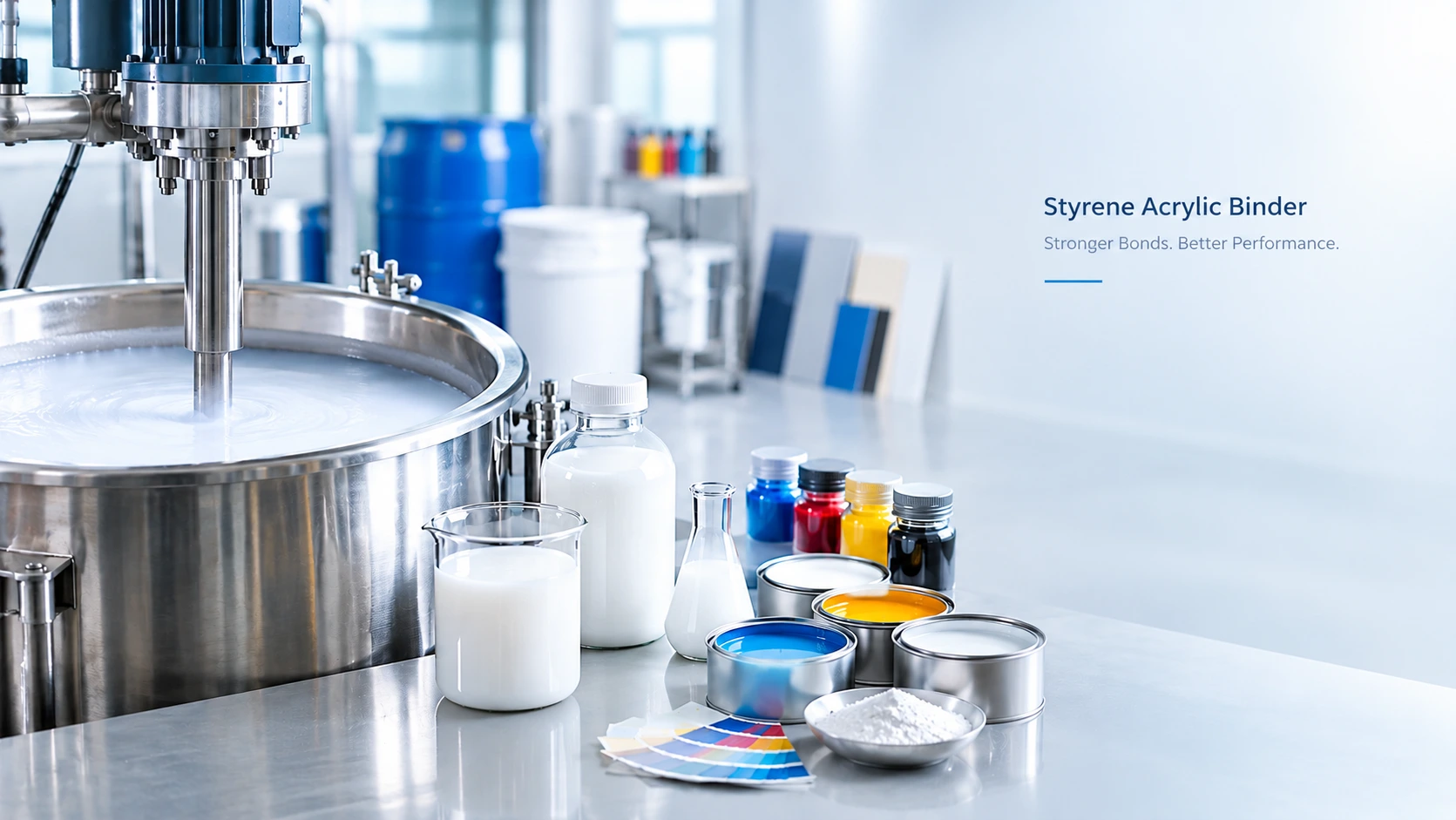
What Is Styrene Acrylic? Properties, Benefits & Industrial Applications Explained
Styrene acrylic is a water-based polymer binder used in paints, coatings, adhesives, inks, and other industrial formulations. It is made by combining styrene with acrylic monomers. This gives the polymer a useful balance of hardness, flexibility, adhesion, and durability.
The binder plays an important role in a finished product. In a coating, for example, it helps hold pigments and other ingredients together after application. It also helps the coating form a continuous film on the surface.
A styrene acrylic binder can be designed for different performance needs. Some grades focus on flexibility, while others offer higher hardness, better chemical resistance, or improved film formation.
For manufacturers, the right grade depends on the surface, application method, and conditions the finished product will face.
How Styrene Acrylic Binders Work
A binder is part of a formulation that holds other ingredients together. In paints and coatings, it helps pigments and fillers stay in place and forms the film left after water evaporates.
A styrene acrylic binder combines two useful characteristics:
- Styrene can add hardness and strength
- Acrylic components can improve flexibility and adhesion
- The balance between them can be adjusted for different applications
- The resulting polymer can provide good film formation
This balance makes styrene acrylic useful for both interior and exterior products.
Water-based systems also use water as the main carrier instead of large amounts of organic solvent. The U.S. Environmental Protection Agency notes that water-based coatings can help reduce VOC emissions compared with some solvent-based coating systems, although the actual VOC level depends on the formulation. (epa.gov)
Key Properties That Make Styrene Acrylic Useful
The performance of styrene acrylic depends on its formulation and grade. However, several properties make this polymer useful across industrial applications.
- Adhesion
A good binder must adhere well to the surface. Styrene acrylic systems can offer adhesion to substrates such as wood, metal, plastics, and composite materials, depending on the grade and formulation.
- Film Formation
The binder needs to form a continuous film after application. Good film formation helps create a smooth and stable coating.
- Hardness And Flexibility
Styrene can contribute to hardness, while acrylic components can support flexibility. Manufacturers can adjust the polymer design to achieve the required balance.
- Weather Resistance
Exterior coatings face sunlight, moisture, and temperature changes. Suitable styrene acrylic binder grades can provide useful resistance to these conditions.
- Chemical Resistance
Certain grades can offer resistance to mild acids, alkalis, and common solvents. The level of resistance depends on the polymer composition and finished formulation.
Where Styrene Acrylic Is Used
The versatility of styrene acrylic allows it to work across several industries. The choice of grade depends on the required finish, substrate, processing method, and service conditions.
Common applications include:
| Industry | Typical Use | Key Requirement |
| Architectural coatings | Interior and exterior paints | Adhesion and durability |
| Industrial coatings | Protective finishes | Hardness and resistance |
| Adhesives | Bonding formulations | Adhesion and flexibility |
| Printing inks | Water-based inks | Film formation and finish |
| Textiles | Coating and finishing | Flexibility and adhesion |
| Paper | Surface coating | Smoothness and binding |
| Ceramics | Coating systems | Adhesion and film formation |
| Metal coatings | Primers and DTM systems | Surface adhesion and protection |
The wide application range is one reason manufacturers continue to use acrylic binders in water-based formulations.
Benefits For Paints And Coatings
Paint manufacturers need a binder that can support both application and final film performance. A suitable styrene acrylic binder can contribute to several important properties.
Better Surface Finish
The binder helps hold pigments and fillers within the coating. Good film formation can support a smoother surface.
Stronger Adhesion
A coating that does not adhere well can peel or lose its finish. The right binder can improve adhesion to the selected substrate.
Balanced Hardness
Hardness helps a coating resist marks and wear. However, excessive hardness can make a film brittle. Styrene acrylic systems can be formulated to balance these properties.
Outdoor Performance
For exterior applications, resistance to sunlight and weather is important. Suitable grades can support longer-lasting coating performance.
Formulation Compatibility
The binder must work with pigments, fillers, stabilisers, and other additives. Compatibility testing is still needed because performance can vary between formulations.
Styrene Acrylic Vs Other Acrylic Binders
Not all acrylic binders offer the same performance. Their properties depend on the monomers used, polymer structure, solids content, and formulation.
Styrene acrylic systems are often selected when manufacturers want a balance between cost, hardness, adhesion, and durability.
Pure acrylic systems may be selected when higher weathering or colour retention is required for a specific application. Styrene acrylic can be a practical choice where a balance of performance and formulation cost is important.
The right option should always be selected based on the finished product rather than the binder name alone.
Different Grades for Different Industrial Needs
Manufacturers do not use one universal styrene acrylic binder for every product. Different grades are designed for different performance targets.
Common categories include:
Standard grades
These are suitable for general interior and exterior coating applications where balanced performance is required.
High-solids grades
These can provide higher film build and coverage for selected industrial coatings and adhesive systems.
Modified grades
These are developed for specialised applications where improved chemical resistance, adhesion, or substrate compatibility is required.
Clear grades
These are used where transparency, gloss, and surface appearance are important.
This grade-based approach allows manufacturers to select a binder that fits their process rather than adjusting the entire formulation around a limited raw material.
What Manufacturers Should Check Before Buying
Choosing a styrene acrylic product should start with the application. Price alone should not decide the grade.
Manufacturers should review:
- Solids content
- Viscosity
- pH
- Film formation
- Adhesion
- Hardness
- Flexibility
- Chemical resistance
- Weather resistance
- Compatibility with other formulation ingredients
The application method also matters. A formulation applied by spray may need different flow and viscosity characteristics from one applied by brush or roller.
A small laboratory trial can help identify issues before a material is used at production scale.
Why Consistent Quality Matters In Production
Raw material variation can affect the finished product. Changes in viscosity, solids content, particle size, or other properties may alter processing and film performance.
For this reason, manufacturers should work with suppliers that provide clear specifications and batch-level quality information.
The U.S. National Institute of Standards and Technology highlights the importance of measurement and reliable data for manufacturing quality and process control. (nist.gov)
For a styrene acrylic binder, useful quality checks may include:
- Solids content
- Viscosity
- pH
- Appearance
- Particle characteristics
- Film properties
The exact checks should match the intended application.
Making The Right Choice For Your Formulation
Styrene acrylic is a versatile binder for water-based industrial formulations. Its combination of adhesion, film formation, hardness, flexibility, and resistance makes it suitable for many products.
However, there is no single grade that works best for every application. A coating for an exterior wall may need different properties from an adhesive, printing ink, or metal coating.
We recommend starting with the application requirements and then selecting the binder grade. This helps manufacturers avoid unnecessary formulation changes and achieve more consistent results.
At Classic Solvents, we help industrial manufacturers select suitable styrene acrylic binder grades based on their _application and performance needs. We understand that acrylic binders must work well with the complete formulation, not just meet a basic product specification.
We focus on consistent supply, clear product information, and application-based support. If you are evaluating styrene acrylic for a new formulation or looking to improve an existing one, we can help you identify a suitable grade for your process.
